3 Wholesome Dishes for your September Reset
September brings a natural pause—a reset between summer’s abundance and the deeper routines of fall. It’s the perfect moment to reframe eating habits around wholesome, affordable foods that feel comforting without overcomplication. The goal isn’t restrictive: it’s nourishing, seasonal, and kind to your time and budget. Below are gentle principles for a September reset, followed by three easy, cozy autumn recipes that stretch ingredients, minimize waste, and maximize comfort.
Principles for a wholesome September reset
Lean on seasonal produce. Apples, pears, squash, sweet potatoes, root vegetables, and hearty greens are at their best and most affordable now. They add flavor, fiber, and nutrients.
Prioritize whole foods. Choose minimally processed grains, beans, nuts, and plain dairy or dairy alternatives. These are filling, versatile, and cost-effective.
Batch and repurpose. Cook once, eat twice. A roasted tray can become a salad topper, filling for tacos, or a breakfast hash.
Emphasize simple proteins. Eggs, canned tuna, beans, and tofu are inexpensive, versatile, and quick. Rotisserie chicken or a small roast can stretch across meals.
Comfort without excess. Warm bowls, one-pan dinners, and slow-simmered soups deliver the cozy factor with reasonable portions and modest prep
One-Pan Autumn Harvest Bowl (serves 4)
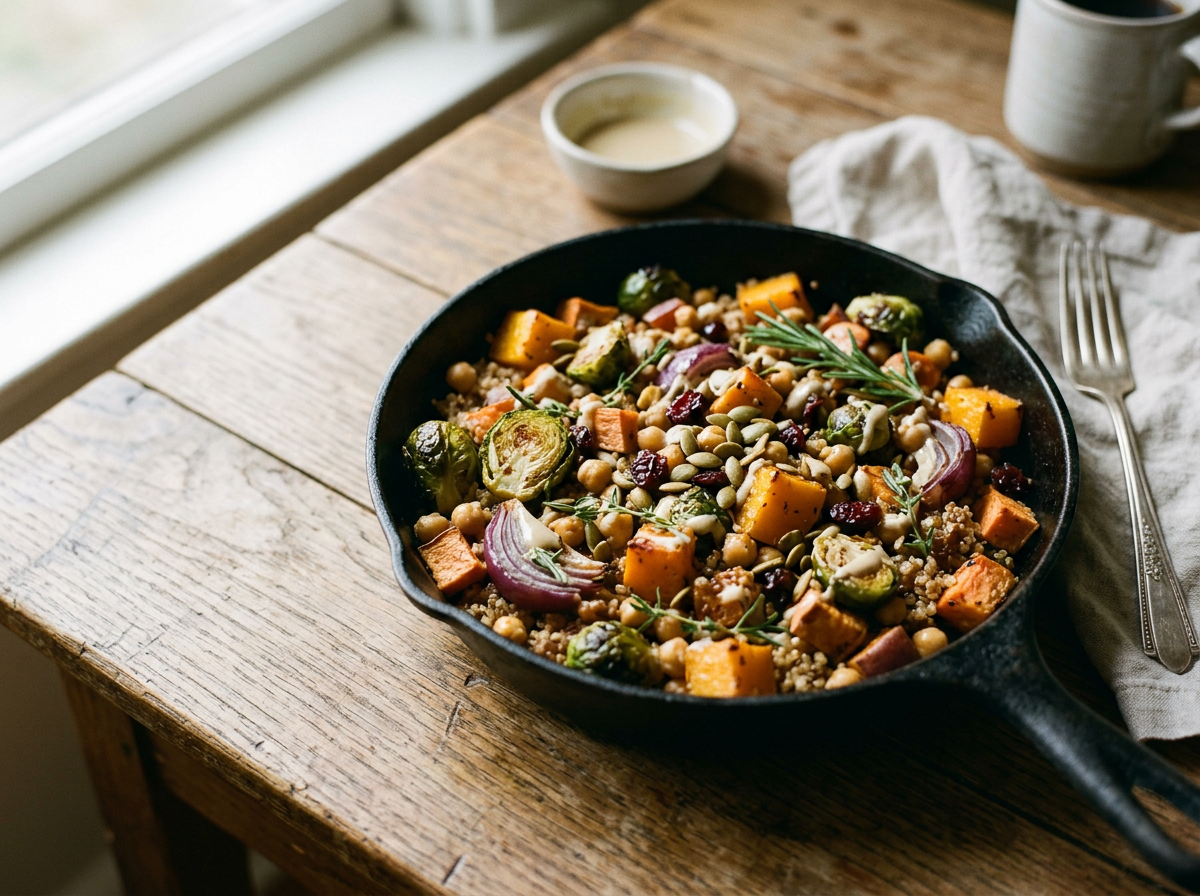
Why it works: Uses inexpensive seasonal vegetables, minimal dishes, and is easy to customize for meat-eaters or vegetarians.
Ingredients
2 medium sweet potatoes, peeled and cubed
1 small butternut squash (or 2 cups cubed), peeled and seeded
1 red onion, sliced into wedges
2 tablespoons olive oil
1 teaspoon smoked paprika
1/2 teaspoon ground cinnamon
Salt and black pepper, to taste
1 can (15 oz) chickpeas, drained and rinsed
4 cups mixed greens or baby spinach
1/4 cup pumpkin seeds or chopped walnuts, toasted
Optional: crumbled feta or plain yogurt for serving
Dressing
2 tablespoons olive oil
1 tablespoon apple cider vinegar
1 teaspoon Dijon mustard
1 teaspoon honey or maple syrup
Pinch of salt and pepper
Method
Preheat oven to 425°F. Toss sweet potatoes, squash, and red onion with olive oil, smoked paprika, cinnamon, salt, and pepper. Spread on a sheet pan in a single layer.
Roast 25–30 minutes, turning once, until edges are caramelized and vegetables are tender. In the last 8 minutes, scatter the chickpeas on the pan to heat and crisp slightly.
Whisk dressing ingredients together. Build bowls with a base of mixed greens, top with roasted vegetables and chickpeas, sprinkle with seeds or nuts, and finish with feta or a dollop of yogurt and dressing. Tip: Double the recipe and save leftovers—roasted vegetables reheat well or can be added cold to salads.
Cozy Apple-Sage Chicken & Farro Skillet (serves 4)
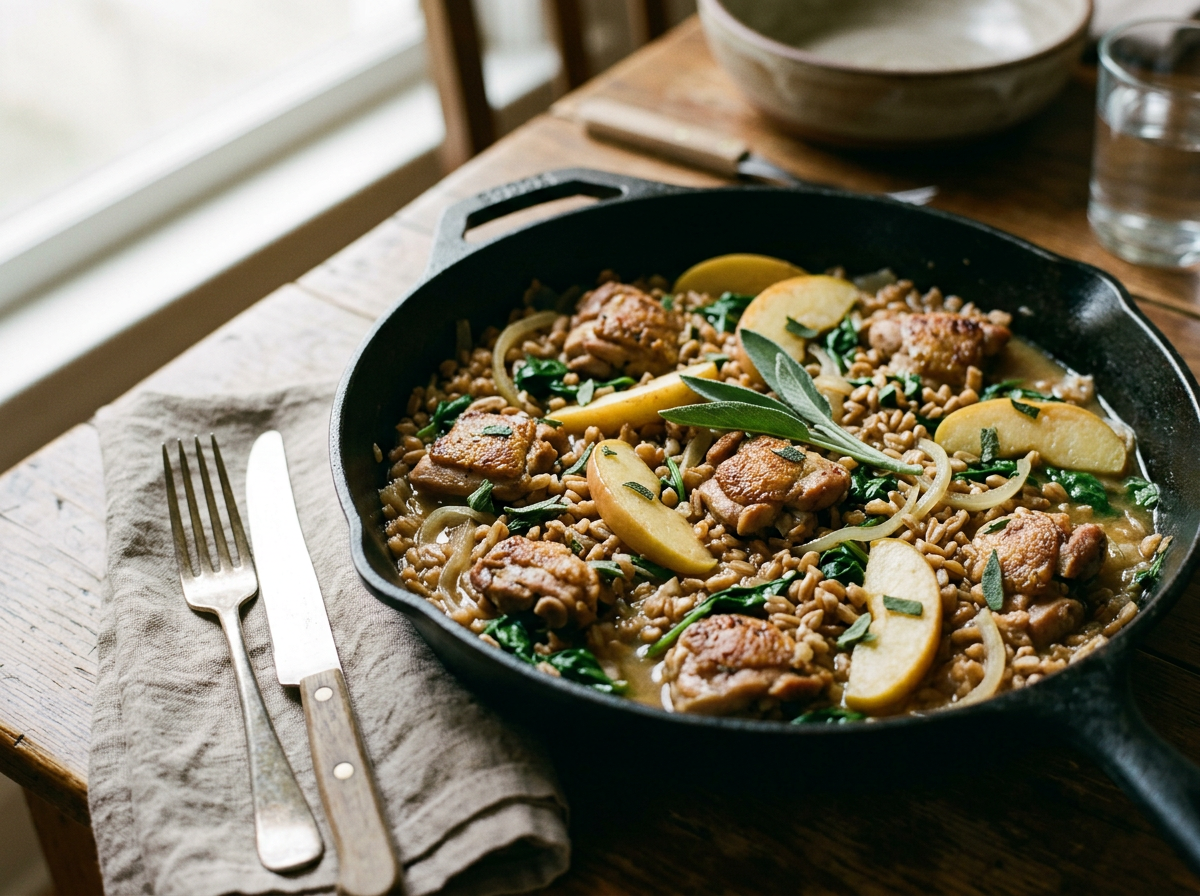
Why it works: Farro (or barley) is an affordable whole grain that cooks into a chewy, satisfying base; apple and sage bring quintessential fall flavors without fuss.
Ingredients
1 cup farro (or pearled barley)
2 tablespoons olive oil, divided
1 lb boneless, skinless chicken thighs, cut into bite-sized pieces (or use firm tofu for vegetarian)
Salt and pepper
1 medium onion, thinly sliced
2 apples (firm variety like Fuji or Honeycrisp), cored and sliced
2 cloves garlic, minced
1 teaspoon chopped fresh sage (or 1/2 teaspoon dried)
1/2 cup low-sodium chicken broth (or vegetable broth)
2 cups baby spinach
Method
Cook farro according to package instructions, drain, and set aside.
Heat 1 tablespoon oil in a large skillet over medium-high heat. Season chicken with salt and pepper and cook until browned and cooked through, about 6–8 minutes. Remove and set aside.
Add remaining oil to the skillet. Sauté onion until soft, then add apple slices and cook until they begin to soften. Add garlic and sage, cook 1 minute.
Return chicken to the skillet, add broth and cooked farro, and heat through. Stir in spinach until wilted. Adjust seasoning. Tip: Farro keeps well refrigerated for several days and makes a hearty
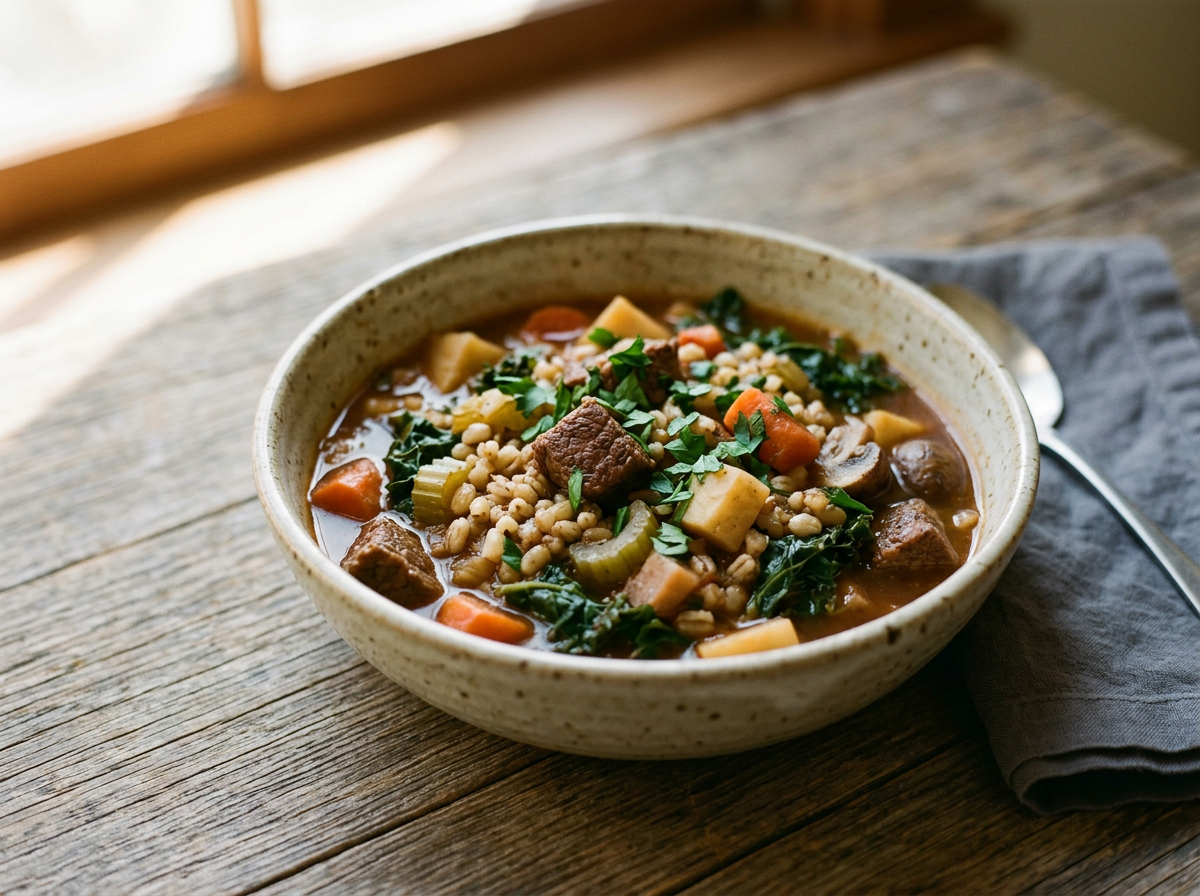
Beef, Barley, and Root Vegetable Stew (One-Pot, Hearty & Wholesome)
Serves: 6–8 Time: 2–2½ hours (active 30–40 minutes)
Ingredients
2 lb (900 g) boneless beef chuck, cut into 1–1½ inch cubes
2 tsp kosher salt, divided
1 tsp freshly ground black pepper, divided
2–3 tbsp olive oil or neutral oil
1 large yellow onion, diced
3 garlic cloves, minced
2 medium carrots, peeled and cut into 1-inch pieces
2 parsnips or additional carrots, peeled and cut into 1-inch pieces
2 celery stalks, sliced
8 oz (225 g) baby bella or cremini mushrooms, halved
1 cup pearl (hulled) barley, rinsed
1 tbsp tomato paste
1 tbsp Worcestershire sauce (optional)
1/2 cup dry red wine (optional, can substitute extra broth)
6 cups low-sodium beef or vegetable broth
1 bay leaf
1 tsp dried thyme (or 1½ tsp fresh)
2 tsp fresh rosemary, chopped (or 1 tsp dried)
2 cups chopped kale or Swiss chard, stems discarded and leaves chopped
1–2 tbsp apple cider vinegar or lemon juice (to finish)
Chopped fresh parsley for garnish
Method
Prep beef: Pat the beef cubes dry with paper towels (this helps browning). Season lightly with 1½ tsp salt and ½ tsp pepper.
Brown beef: Heat a large heavy-bottomed pot or Dutch oven over medium-high heat. Add 1–2 tbsp oil. Working in batches so the meat isn’t crowded, brown the beef on all sides (2–3 minutes per side). Remove browned pieces to a plate; don't worry about fully cooking through.
Sauté aromatics and vegetables: Reduce heat to medium. If needed, add another tablespoon oil. Add onion and a pinch of salt; cook until softened and translucent, 5–6 minutes. Add garlic and cook 30 seconds. Add carrots, parsnips, celery, and mushrooms; cook until they begin to soften and mushrooms release liquid, 4–6 minutes.
Build flavor: Stir in tomato paste and cook 1–2 minutes to caramelize. If using wine, pour it in now to deglaze the pan, scraping up browned bits; let it reduce by half (2–3 minutes). Stir in Worcestershire sauce if using.
Add beef, barley, and broth: Return browned beef and any accumulated juices to the pot. Add rinsed barley, broth, bay leaf, thyme, rosemary, and remaining salt and pepper. Bring to a gentle boil, then reduce heat to low so the stew simmers gently.
Simmer: Cover and simmer for 1–1¼ hours, stirring occasionally, until beef is tender and barley is cooked through. If you prefer a thicker stew, simmer uncovered for the last 15–20 minutes; add a splash more broth if it gets too thick.
Finish: Stir in chopped kale or Swiss chard and cook 5–7 minutes until wilted and tender. Remove bay leaf. Taste and adjust seasoning, adding apple cider vinegar or lemon juice to brighten flavors and the remaining salt and pepper as needed.
Serve: Ladle into bowls and garnish with chopped parsley.
Tips & Variations
Make-ahead: Stew often tastes better the next day. Cool completely, refrigerate up to 3 days, or freeze up to 3 months. Reheat gently on the stove, adding a little water or broth if needed.
Grain option: Swap barley for farro or pearl couscous (adjust cooking time and liquid as needed). Do not use quick-cooking barley for the full simmer—follow package instructions.
Slow-cooker option: Brown beef and sauté aromatics, then combine everything (except delicate greens and vinegar) in a 4–6 quart slow cooker. Cook on low 7–8 hours or high 4–5 hours. Add greens and vinegar in the last 15–30 minutes.
Lighter swap: Use more root vegetables and reduce beef to 1½ lb for fewer calories but still hearty.
Gluten-free: Use gluten-free pearl millet or replace barley with 1½ cups quinoa (add near the end and cook 20–25 minutes) — note texture changes.
Nutrition (approximate per serving)
Calories: ~420–520 (varies by cut of beef and amount of oil)
WATCH THE PODCAST
Join Natalie in conversation with special guests to talk women's health, wellbeing and lifestyle.
FITNESS